AI War Videos Are Flooding Social Media and Changing the Way People Trust the Internet
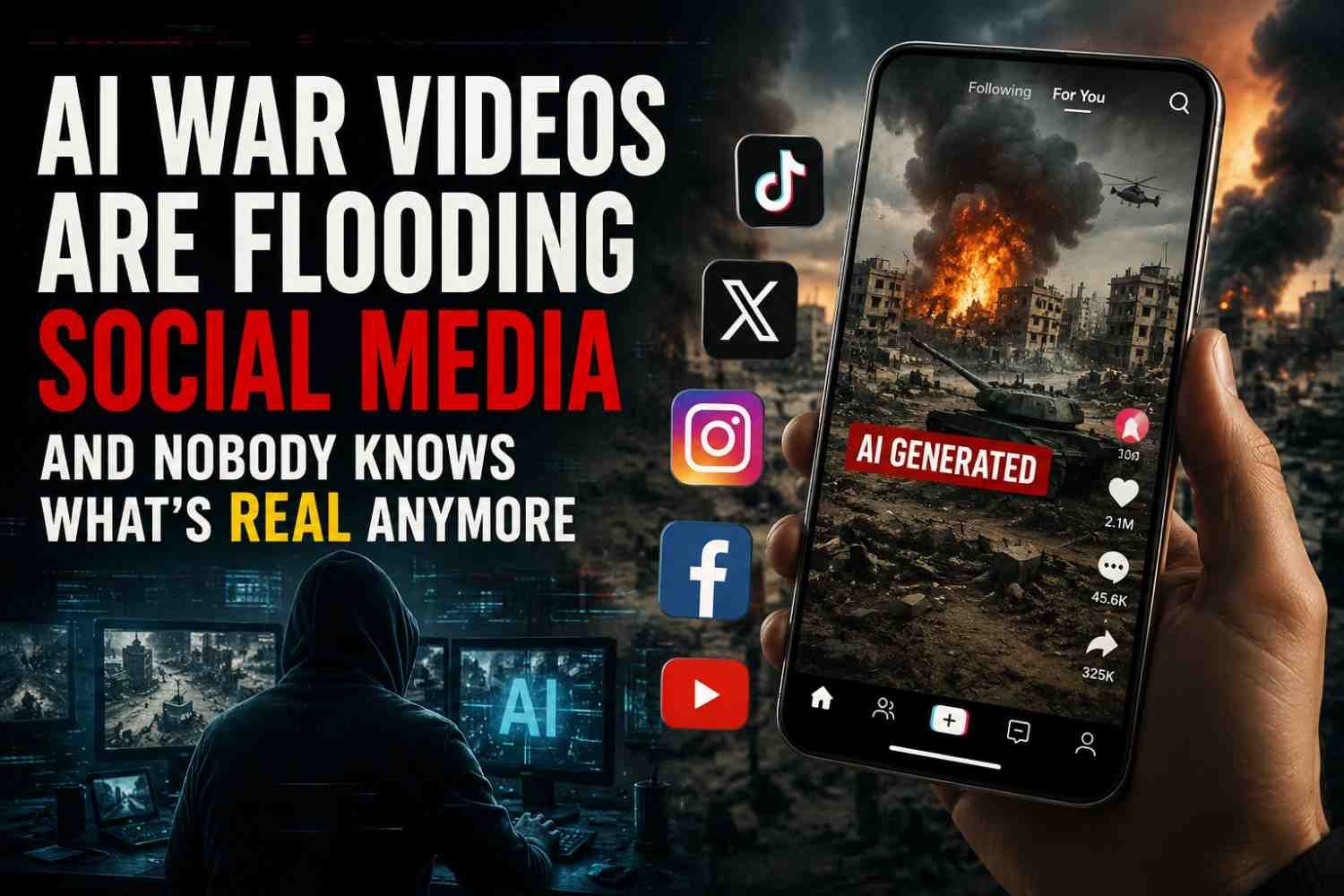
There was a time when people believed almost everything they saw in a video online. Photos could be edited and social media posts could be misleading, but video still felt believable. That trust is now starting to disappear as AI war videos spread across the internet at an unbelievable speed.
Over the past few months, social media platforms have been flooded with AI-generated military footage, fake missile attacks, manipulated battlefield clips, and deepfake speeches designed to look completely real. Some videos are so convincing that millions of users share them before anyone even questions whether the footage is authentic.
The rise of AI war videos is creating a serious problem online because misinformation is no longer limited to edited images or fake headlines. Artificial intelligence can now generate realistic war scenes, cloned voices, and convincing political speeches within minutes, making it harder than ever for people to separate truth from digital manipulation.
Why AI War Videos Are Suddenly Everywhere Online
One of the biggest reasons AI war videos are spreading so quickly is because modern AI tools have become extremely accessible. Earlier, creating realistic fake videos required expensive software, advanced editing skills, and professional production work. Today, AI platforms can generate highly convincing visuals in a matter of minutes.
Many of these tools are now being used to create:
Fake battlefield footage
AI-generated explosions
Deepfake political speeches
Manipulated military visuals
Cloned celebrity and political voices
Viral misinformation clips
As global conflicts dominate online discussions, this type of content spreads even faster. During recent international tensions and military escalations, social media feeds became filled with dramatic clips claiming to show attacks, missile launches, and combat scenes. Several of those videos later turned out to be fake or heavily manipulated.
The problem is that by the time fact-checkers identify the truth, the content has already reached millions of users.
How Social Media Algorithms Help AI War Videos Go Viral
Social media platforms are designed to reward engagement. The more emotional a piece of content feels, the more likely people are to react, comment, and share it with others.
That system works perfectly for AI war videos.
Fear, shock, anger, and confusion generate massive interaction online. When users see dramatic military footage or breaking war clips, most react emotionally before verifying whether the content is real.
Platforms like TikTok, X, Instagram, Facebook, and YouTube automatically push highly engaging content deeper into user feeds. As engagement increases, the algorithm promotes the video to even larger audiences.
This creates a cycle where fake content spreads faster than verified journalism.
Several cybersecurity experts now believe AI war videos could become one of the most dangerous forms of digital misinformation over the next decade because they combine emotional manipulation with highly realistic visuals.
Why People Are Starting to Lose Trust in Online Content
The biggest long-term impact of AI war videos may not be political. It may be psychological.
People are beginning to question almost everything they watch online. Every viral clip now creates uncertainty because users know artificial intelligence can generate realistic fake footage that looks believable at first glance.
That shift is quietly changing internet culture itself.
For years, social media was built around instant reactions and rapid sharing. Now, users are becoming more cautious because they understand that seeing a video online is no longer enough to prove that it is real.
Experts believe this growing distrust could permanently reshape how people consume news, react to global events, and interact with online platforms in the future.
Governments and Tech Companies Are Growing Increasingly Concerned
Governments, cybersecurity analysts, and technology companies are now openly discussing the dangers of AI-generated misinformation.
Several experts believe future conflicts may involve large-scale propaganda campaigns powered by artificial intelligence. Instead of relying only on traditional media, misinformation campaigns could spread through viral videos, manipulated speeches, and AI-generated war footage shared directly on social media.
Technology companies are trying to improve systems that detect fake videos more quickly, but the challenge is becoming harder every month because AI tools themselves are improving rapidly.
Every new generation of artificial intelligence software creates more realistic visuals, better voice cloning, and more convincing video quality. That means fake content is becoming increasingly difficult to identify.
At the same time, ordinary users often do not have the technical knowledge needed to detect manipulated videos, making social media platforms even more vulnerable to viral misinformation.
Why AI War Videos Could Change the Internet Forever
The rise of AI war videos represents something much bigger than just another social media trend. It reflects a major shift in how information spreads online and how public opinion forms in the digital age.
For the first time, millions of people are realizing that digital content can no longer be trusted automatically simply because it looks real.
That realization is changing the internet itself.
Experts believe the rapid growth of AI war videos could permanently transform journalism, social media, online trust, and even political communication over the next several years.
As artificial intelligence continues evolving, the battle between real information and digital manipulation may become one of the defining internet challenges of the modern era.
FAQ
What are AI war videos?
AI war videos are fake or manipulated military videos created using artificial intelligence tools to look realistic.
Why are AI war videos spreading so quickly?
AI war videos spread rapidly because social media algorithms promote emotional and highly engaging content.
Are AI war videos dangerous?
Yes. Experts believe AI war videos can spread misinformation, manipulate public opinion, and reduce trust in online information.
Why are people discussing AI war videos right now?
Recent global conflicts and rapid improvements in AI technology have increased public concern around fake military footage and deepfake propaganda online.
Looking For Create a Website For Your Business Click Here`