Will AI Replace Human Jobs by 2030? The Truth About the Future of Work
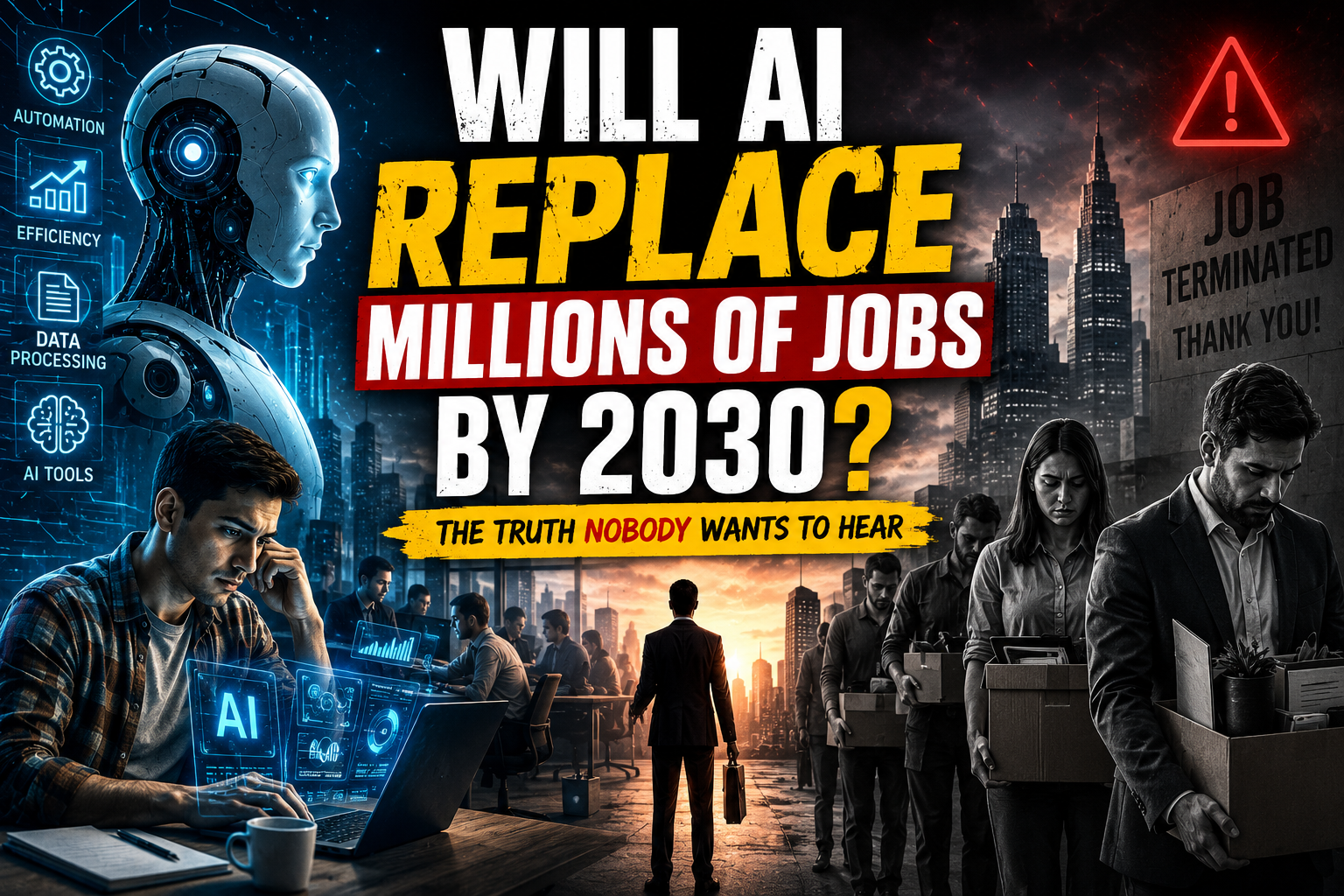
A few years ago, most people thought AI was just another tech trend that would mostly help big companies and software engineers. Nobody really imagined that normal people would start using AI tools every single day. But now things are changing so fast that even students and office workers are getting nervous about the future.
Today, AI can write emails, create images, answer questions, edit videos, generate ideas, and even write computer code within seconds. Tools like ChatGPT and Gemini have completely changed how people work online. The crazy part is that this technology is still in its early stage, and it’s already powerful enough to replace a lot of repetitive work.
That’s why the internet is full of one big question right now: Will AI Replace Human Jobs by 2030?
The truth is, some jobs are already being affected.
Many companies are slowly reducing manual work because AI tools are faster and cheaper. Customer support is one of the biggest examples. A lot of businesses now use AI chatbots instead of hiring large support teams. Content writing is also changing quickly because AI can create basic articles, captions, and product descriptions almost instantly.
Graphic design, coding, video editing, and marketing are also starting to feel the impact. Earlier, companies needed multiple people for these tasks. Now one person with AI tools can sometimes do the same work much faster.
This is exactly why so many people are worried. Students are confused about which careers will still be valuable in the future. Office workers are scared that their experience may stop mattering if companies choose automation instead of employees.
Technology can give information very quickly, but it still struggles with real human emotions, personal experiences, creativity, and deep communication. That’s why jobs involving human interaction are still much safer right now. Teachers, therapists, doctors, psychologists, and leadership roles still depend heavily on human understanding.
History also shows that new technology usually creates new opportunities along with problems. When the internet became popular, many traditional jobs disappeared, but entirely new careers were created too. Social media managers, YouTubers, app developers, influencers, and digital marketers became successful because the online world opened new doors.
Something similar may happen with AI.
Companies are already looking for people who know how to use AI tools properly. Skills related to automation, AI content editing, cybersecurity, and prompt writing are becoming more valuable. People who learn how to work with AI instead of fighting it will probably have a much better advantage in the coming years.
The biggest change is that people may need to keep learning new skills much more often now. Earlier, someone could study once and use the same knowledge for years. That is becoming harder because technology is evolving so quickly.
This is also why many experts now say that communication skills, creativity, problem solving, and adaptability could become more important than traditional qualifications alone.
Nobody really knows exactly what the world will look like by 2030. Some people believe AI will make life easier and help humans focus on more creative work. Others think it could become one of the biggest job disruptions in modern history.
Right now, both possibilities feel real.
Will AI Replace Human Jobs by 2030?
AI can replace repetitive tasks, but jobs that need emotions, creativity, and human connection are still difficult for machines to copy.
Which Jobs Are Most at Risk Because of AI?
Jobs involving repetitive work like data entry, basic customer support, and simple content creation are currently the most vulnerable.
Should Students Be Worried About AI?
Instead of being scared, students should focus on learning skills that work alongside AI, such as creativity, communication, and problem solving.
Read more about