Citizen Journalism in India: Fake Reporters, Hate Speech, and the Urgent Need for Balanced Regulation
Citizen journalism in India has grown rapidly with the rise of smartphones and social media. Today, anyone with a mobile phone and internet connection can report, stream, or comment on events as if they were professional journalists. On the positive side, this has democratized information and given ordinary citizens a voice. On the negative side, it has created a wave of unqualified “reporters” who misuse digital platforms for harassment, misinformation, and even hate speech.
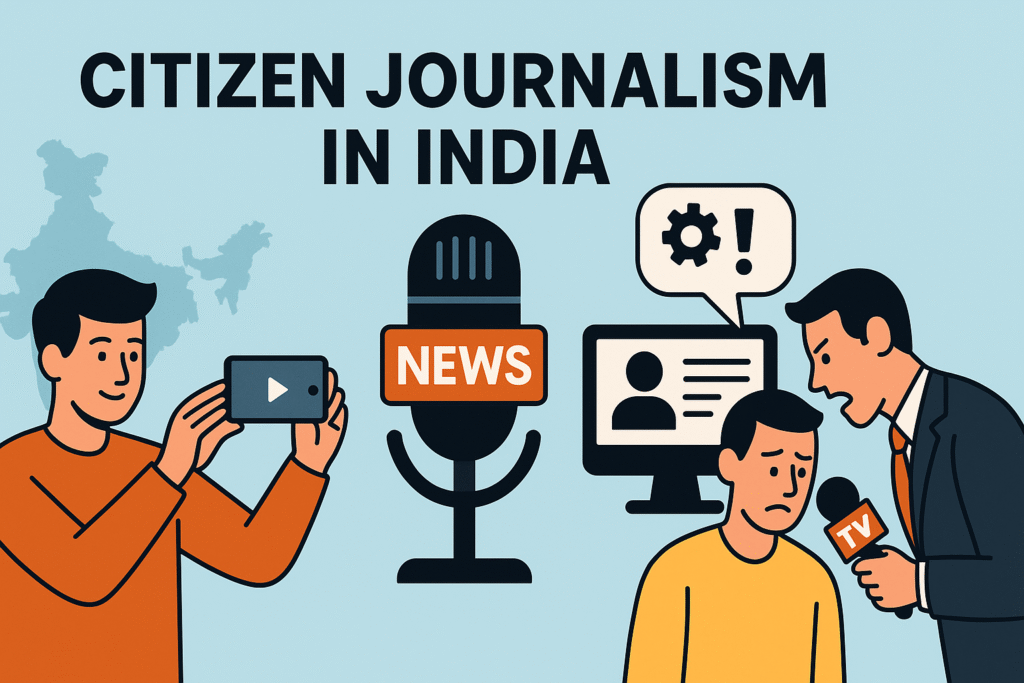
The problem becomes serious when such fake reporters use their platforms not for truth or accountability but for sensationalism and communal division. India, being a diverse country with multiple religions and communities, is particularly vulnerable to this misuse. Meanwhile, China has recently tightened regulations around citizen journalism, enforcing stricter rules and licensing systems for online reporting.
The question arises: should India adopt similar regulation, or is there a more democratic, balanced path forward?
This blog takes a deep look at citizen journalism in India, the problem of fake reporters, the challenge of hate speech, lessons from China, and the need for balanced regulation that protects both freedom of speech and public safety.
What is Citizen Journalism in India
Citizen journalism refers to the practice where ordinary individuals, without formal training in journalism, use tools like smartphones, social media, and video platforms to report news or share opinions. This form of journalism relies on accessibility and immediacy. Anyone, anywhere, can upload a video, write a post, or live stream an event and reach millions of people.
Benefits of Citizen Journalism in India
Real-time coverage: Local issues, protests, accidents, and events can be covered instantly before mainstream media arrives.
Democratization of information: Marginalized communities and individuals get a voice without waiting for mainstream coverage.
Accountability: Citizen journalists can expose corruption, mismanagement, and issues ignored by established media.
Community engagement: People feel connected when someone from their own locality speaks up on issues.
Challenges of Citizen Journalism
Lack of verification: Information often spreads without fact-checking.
Harassment: Confrontational reporting creates drama but causes harm.
Fake reporters in India: People misuse the label of “journalist” for personal fame, money, or influence.
Hate speech and communal tension: Some intentionally create religious or political divides.
No editorial accountability: Unlike traditional media, there is no editor or legal oversight.
The Rise of Fake Reporters in India
In India, the number of self-styled “reporters” has increased rapidly. Armed with microphones, logos, and cameras, these individuals pose as professional journalists but lack the training, ethics, and credibility.
How Fake Reporters Operate
- They use confrontational techniques, placing microphones in front of people without consent.
- They sensationalize small issues with misleading titles and edited clips.
- They often push divisive narratives, especially around Hindu-Muslim topics.
- They spread rumors without verification, knowing that shock value drives more views.
- They monetize their content through ads, donations, and paid promotions.
The Impact of Fake Reporters in India
- Harassment of common people: Individuals are publicly shamed and recorded without context.
- Damage to social harmony: Fake news and communal hate messages fuel real-world conflicts.
- Loss of trust in genuine journalism: The credibility of real journalists gets damaged.
- Spread of misinformation: Once viral, false content is almost impossible to fully correct.
- The rise of fake reporters in India is not only an ethical problem but a social danger, especially when it deliberately incites religious tension.
The Role of Social Media Platforms
- Social media platforms are the biggest enablers of citizen journalism. Platforms like YouTube, Facebook, Instagram, and WhatsApp reward engagement, not accuracy.
- Viral clips spread faster than corrections.
- Algorithms prioritize emotional content such as anger or shock, which fake reporters exploit.
- WhatsApp forwards carry unverified claims, leading to confusion and fear.
- The issue is not just about individuals but also about the platforms that provide amplification without responsibility. Stronger accountability from platforms is necessary if hate speech regulation is to succeed in India.
Hate Speech and Communal Challenges
One of the gravest problems of unregulated citizen journalism is hate speech. Content creators knowingly create videos and posts that pit one community against another.
Examples of Hate Speech Content
- Clips blaming one religion for crimes without evidence.
- Edited interviews that appear to insult another community.
- Religious provocations disguised as “reporting.”
Consequences of Hate Speech in India
- Erosion of social harmony: Long-standing relationships between communities get damaged.
- Risk of violence: Fake news and inflammatory clips can spark local riots or conflicts.
- Misinformation for youth: Young audiences may adopt biased perspectives without fact-checking.
- International reputation damage: India’s democratic image suffers globally.
- While India already has laws such as IPC Section 153A (promoting enmity between groups) and Section 295A (deliberate acts to outrage religious feelings), enforcement against online hate speech remains inconsistent.
Media Regulation in China: Lessons and Warnings
China recently introduced stricter controls on citizen journalism and online media. The government requires licensing for anyone publishing political or news content online. Only state-approved individuals or organizations are allowed to post news on sensitive topics.
Key Features of China’s Model
- Licensing system for online reporters.
- Strict penalties for spreading misinformation.
- Government oversight on what qualifies as “news.”
- Platform responsibility to remove unapproved content quickly.
- Pros of the Chinese Approach
- Reduces the spread of misinformation.
- Limits communal and political unrest.
- Ensures strong accountability for content creators.
- Cons of the Chinese Approach
- Restricts free speech severely.
- Suppresses independent voices and dissent.
- Risk of government-controlled narratives dominating journalism.
Should India Follow China
India, as a democracy, cannot adopt China’s extreme censorship. Freedom of speech is protected under the Indian Constitution. However, India can take inspiration from China’s emphasis on accountability. Instead of censorship, India should aim for balanced regulation that promotes responsibility without silencing genuine voices.
Solutions for India: Regulation Without Censorship
India must strike a balance between protecting free speech and preventing abuse. Here are practical solutions:
Minimum qualification for reporters
A basic certification course on media ethics and reporting could be mandatory for anyone calling themselves a “journalist.”
Registration of news portals
Any channel claiming to be news should be required to register, disclose ownership, and appoint a grievance officer.
Stricter enforcement of hate speech laws
Deliberate communal content should face swift penalties under existing IPC laws.
Platform accountability
Social media companies must take down harmful content within 24 hours of legal notice and publish regular transparency reports.
Media literacy campaigns
Citizens must be educated to recognize misinformation and avoid sharing unverified content.
Complaint redressal system
A dedicated body should handle complaints against fake reporters and take quick action.
Why Blanket Bans Won’t Work
Some demand a complete ban on citizen journalism. However, such a ban is neither practical nor constitutional in India. The Supreme Court, in the Shreya Singhal case (2015), struck down Section 66A of the IT Act because it was vague and restricted free speech. Broad restrictions on online speech will not stand in a democratic country.
Instead of blanket bans, India needs targeted, clear regulations that punish deliberate hate and misinformation while encouraging ethical citizen reporting.
Conclusion
Citizen journalism in India is both an opportunity and a risk. It empowers ordinary people but also gives rise to fake reporters who harass, misinform, and spread hate. China’s strict regulation shows one extreme of control, but India’s path must be different. The solution lies in balanced regulation—one that ensures accountability, enforces hate speech regulation, holds platforms responsible, and educates citizens, while still protecting freedom of speech.
If India adopts this middle path, citizen journalism can evolve into a powerful democratic tool instead of a dangerous weapon.
FAQs
Q1. What is citizen journalism in India?
Citizen journalism in India is when ordinary people use smartphones and social media to report or share news without professional training.
Q2. Why are fake reporters in India a problem?
Fake reporters in India often spread misinformation, harass individuals, and incite communal hate for views and profit.
Q3. What is hate speech regulation in India?
Hate speech regulation in India is enforced through IPC sections like 153A and 295A, but enforcement on online platforms is weak.
Q4. What is media regulation in China?
China requires licenses for anyone posting news online, restricting unverified individuals from reporting sensitive issues.
Q5. Should India ban citizen journalism?
No, India should not ban it. Instead, the government should regulate it through minimum qualifications, registration, strict action against hate speech, and platform accountability.
AI Action Summit 2025 Read Full Blog Click here
Looking for professional digital marketing support to scale your business? Click here